
Beyond the Final Whistle: How the 2026 World Cup Changed the Way the World Sees Miami
The 2026 FIFA World Cup did more for Miami than fill a stadium seven times — it brought hundreds of thousands of visiting supporters into the city’s streets and placed it before a global audience of millions, many discovering for the first time that Miami has quietly become a global capital of finance, lifestyle, and luxury real estate. Before the tournament, I wrote about what the World Cup could mean for Miami. That piece was built on projections. This one is built on what I saw — from stadium seats in Miami, Atlanta, and Dallas, from the hospitality suites where deals quietly began, and from the flight decks of a private aviation operation that never stopped moving.
A World Cup Experienced From the Inside
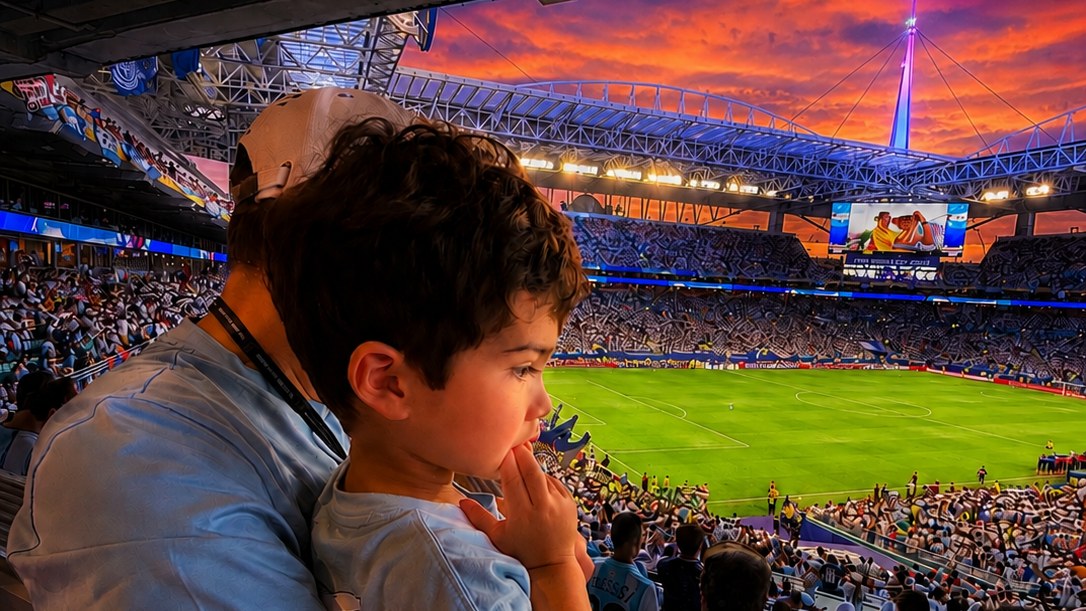
Watching a World Cup on television is extraordinary; living it inside the host cities is something else entirely. I attended matches in three of them, and every stadium shared one characteristic that stays with me: a true full house. Not sold out on paper — genuinely full, from the opening whistle to the final minute, tens of thousands of supporters from every corner of the world singing every anthem and celebrating every goal. The organization matched the occasion. Transportation, security, hospitality, fan zones — supporters kept remarking how smooth the experience was despite the crowds. The United States accepted one of the largest logistical challenges in sports history and delivered — FIFA president Gianni Infantino has called the tournament an “incredible success story” with record attendances, and FIFA projects record revenues for the cycle. Having lived it from the inside, I understand why.

Beyond the Stadiums: Miami as the World’s Meeting Point
Something equally interesting was happening outside the grounds. Everywhere I went, restaurants ran past capacity and hotels ran full; the marinas hosted an extraordinary collection of superyachts, and the shopping districts welcomed visitors from every continent. Walking the hospitality areas before kickoff, I heard English, Spanish, Portuguese, Arabic, French, and Italian in a single lap of the room. Families had crossed continents; executives entertained clients; entrepreneurs scheduled meetings around kickoff times. The World Cup stopped being only football. It became one of the largest networking events in the world — and Miami, more than any other host city, was its natural headquarters.
When Football Creates Real Estate Investors
The most revealing part, from my seat as a luxury real estate advisor, was watching curiosity turn into intent. Over the tournament I met potential clients from Saudi Arabia, Brazil, Argentina, and England, and every conversation began the same way: football. Then, almost on schedule, the questions changed. What is happening in Brickell? How is Sunny Isles Beach evolving? What are the best branded residences currently in development? Is Miami still a strong long-term investment? People who had flown in to watch football wanted to understand Miami as a place to live, invest, and build wealth — many surprised that one compact city could offer financial opportunity, world-class dining, private aviation, marinas, beaches, and internationally branded residences at once. The World Cup introduced them to Miami. Miami convinced them to stay interested. That may prove to be the tournament’s greatest economic legacy.
No Longer Just a Vacation Destination
For decades Miami was shorthand for beaches and tourism. That description no longer tells the story. Brickell has become one of America’s fastest-growing financial districts; South Beach remains one of the world’s most recognizable luxury addresses; Sunny Isles Beach is now synonymous with oceanfront branded living. The World Cup let millions experience that transformation in person — and the shift was not just my observation: press coverage during the tournament documented European supporters revising long-held opinions of America and its cities, Miami among them. Many arrived expecting beaches. They discovered a global city.
The New Definition of Luxury: Access
Ticket prices reached levels many thought impossible months before kickoff — and demand never slowed. The lesson is one the luxury world already understands: experiences cannot be replicated. A World Cup match happens once; the atmosphere cannot be recreated; the memory cannot be purchased later. Luxury today is defined less by possessions than by access — to unrepeatable moments, to exclusive rooms, to history as it happens. No modern event has demonstrated that more clearly.
The Silent Winner: Private Aviation
While the cameras pointed at the pitch, another story unfolded in the sky. Through RoquesAir, our private aviation logistics company, we coordinated charter operations throughout the tournament — frequently multiple flights per day from our Miami base to Atlanta, Dallas, and Teterboro. These were not leisure joyrides; they carried executives, families, professional athletes, and investors whose schedules demanded efficiency, flexibility, and privacy. The most requested aircraft — the Embraer Praetor 600, Gulfstream G550, and Dassault Falcon 6X — are built precisely for that mission. The World Cup proved what our industry has long understood: luxury travel is no longer about extravagance. It is about time. Attending a match in one city, closing business in another, and sleeping at home the same night is the modern definition of wealth — and it is part of the same ecosystem of services our clients use year-round.
The Ripple Effect
Every private flight generated hotel reservations. Every hotel stay generated restaurant visits. Every restaurant introduced someone to Miami’s lifestyle. Every lifestyle experience created curiosity about real estate, and every property tour opened a conversation about investment. The ecosystem fed itself. That is how major international events actually transform cities — not through one industry, but through all of them at once.
Messi, Miami, and a City That Thinks Globally
No conversation about football and Miami can ignore Lionel Messi. His arrival reframed the international perception of South Florida: a global icon choosing Miami to live, work, and invest. His well-publicized residence at Porsche Design Tower — built by Dezer Development, the same developer now raising Bentley Residences — showed years ago that Miami had become the address of choice for elite athletes seeking privacy and connectivity. Today those conversations extend naturally to the projects redefining branded living, from Cipriani Residences to the St. Regis in Sunny Isles Beach. And football keeps writing its own poetry: this final pits Messi’s Argentina against a Spanish side led by Lamine Yamal — the same Yamal who, as a six-month-old baby in a 2007 charity photo shoot, was famously bathed by a teenage Messi. Argentine supporters call that photograph La Bendición — the blessing. Legacy on one side, the future on the other, and Miami somewhere in every conversation between them.
What I Will Remember Most
Years from now I will remember the goals, the atmospheres, the organization. But above all I will remember walking into stadium after stadium and seeing something increasingly rare in modern sport: a true full house — every seat held by someone who traveled, dreamed, and invested time and resources simply to be part of history. And as an advisor and an aviation founder, I will remember watching conversations become relationships, visitors become future investors, and football become the beginning of entirely new opportunities. Whoever lifts the trophy in New York, the economic winners are already clear: hospitality, luxury retail, private aviation, tourism — and real estate. Football brought the world to America. Miami showed it why it should return.
For private guidance on Miami’s luxury market — or the branded residences international buyers asked about all tournament — contact Juan Pablo Chacón of Douglas Elliman.
Ready to Explore Miami's Luxury Market?
Contact Juan Pablo Chacon for personalized guidance on Miami luxury real estate.