
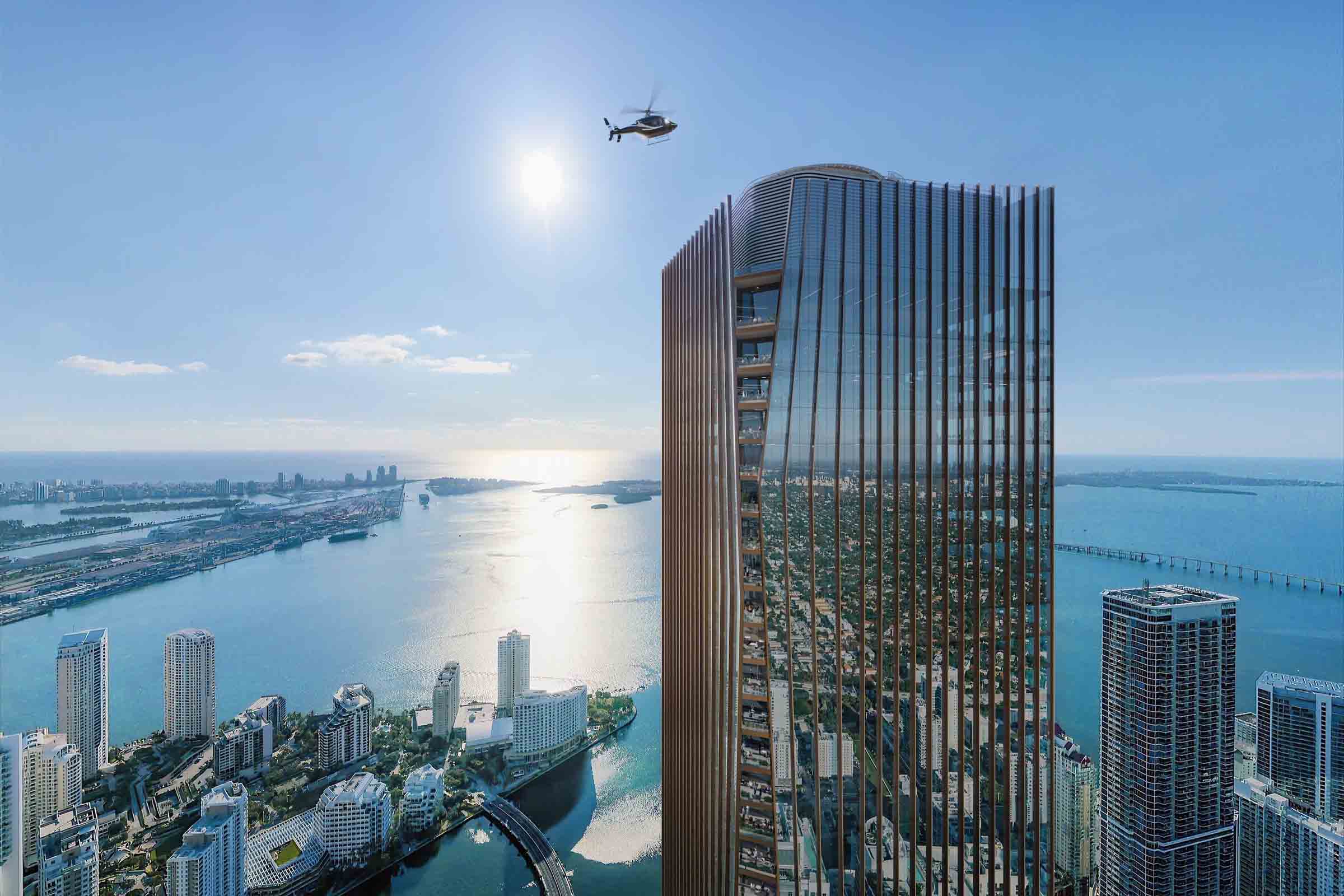
The 2026 Capital Shift: Miami as the New Global Power Base
A Structural Shift in Global Wealth
The 2026 investment landscape is no longer defined solely by markets—it's defined by where capital chooses to live, operate, and scale.
For global investors, Miami has transitioned from a lifestyle destination into a primary hub for capital concentration, driven by the relocation of billionaires, corporate headquarters, and institutional funds.
What we're witnessing isn't a trend—it's a structural shift in the geography of global wealth.
The Billionaire Migration: Anchoring Global Influence
Over the past few years, Miami has attracted some of the most influential individuals in the world. Ken Griffin, Jeff Bezos, Larry Page, Sergey Brin, Mark Zuckerberg, and Peter Thiel have all established significant presence in South Florida.
According to Bisnow, in early 2026, Larry Page purchased two Miami mansions for $173 million, while Mark Zuckerberg bought a $170 million estate on Indian Creek Island—often called "Billionaire Bunker."
This migration isn't about lifestyle—it's about control, access, and proximity to opportunity. These individuals are:
- ● Establishing long-term residency and personal investment offices
- ● Repositioning business interests to Florida's tax-advantaged environment
- ● Aligning their ecosystems with South Florida's growing infrastructure
Miami is rapidly becoming a place where global decisions are made—not just enjoyed.
The Headquarters Shift: Full Corporate Ecosystems
A defining characteristic of this cycle is that companies aren't opening satellite offices—they're relocating core operations.
Ken Griffin's move of Citadel's headquarters from Chicago to Miami in 2022 was a turning point. According to JLL, more than 74 companies relocated their headquarters to Florida between 2020 and 2025—more than any other state.
Most recently, Palantir Technologies—now valued at over $300 billion—announced its headquarters relocation from Denver to Aventura, making it the largest publicly traded company headquartered in South Florida.
When a company relocates at this level, it brings:
- ● Executive leadership and decision-making authority
- ● High-income employees with significant purchasing power
- ● Core departments and supporting infrastructure
- ● Long-term operational commitment to the region
This creates a self-sustaining economic ecosystem, transforming Miami into an operational base rather than a secondary market.
The Tech & Infrastructure Layer
The presence of major technology players continues to deepen. Amazon has expanded to a 75,000-square-foot office in Wynwood. Peter Thiel's Founders Fund has maintained a Miami office since 2021, and his investment firm Thiel Capital opened a Miami office in December 2025.
Miami's tech ecosystem—dubbed "Silicon Beach"—has grown to approximately $150 billion in startup value as of mid-2025, making it the nation's fourth-largest startup ecosystem.
The Workforce Shift: High-Income Talent Driving Demand
The most immediate impact of this capital migration is seen in the quality of the workforce entering Miami.
These relocations bring hedge fund professionals, AI engineers, tech founders, and private equity executives—with compensation levels significantly above national averages.
This new resident base has:
- ● Strong purchasing power for luxury real estate
- ● Preference for turnkey, branded living experiences
- ● Long-term commitment to the market
The relationship is direct: Corporate relocation → Talent migration → Luxury real estate demand.
Miami as a Capital Preservation Market
For both individuals and institutions, Miami offers a rare combination of advantages:
- ● No state income tax on personal or corporate earnings
- ● Business-friendly regulatory environment
- ● Global accessibility via Miami International Airport
- ● Strong legal and financial frameworks for asset protection
This positions Miami as both a growth market and a capital preservation strategy for global investors.
Strategic Takeaway for Investors
For those evaluating Miami in 2026, success depends on understanding one key principle:
This is no longer a speculative cycle—it's a structural realignment of global capital.
The convergence of billionaire relocation, institutional investment, corporate headquarters migration, and high-income workforce growth is creating one of the most resilient and dynamic real estate markets globally.
Miami is no longer competing regionally. It's competing globally—with cities like New York, London, and Dubai—as a destination for capital, influence, and long-term investment.
For private guidance on Miami luxury real estate opportunities, including early-stage and off-market investments, contact Juan Pablo Chacón for a tailored investment conversation.
Ready to Explore Miami's Luxury Market?
Contact Juan Pablo Chacon for personalized guidance on Miami luxury real estate.